
Krafty Page ChronicleS • Issue 3 • April — Create • Stage I: Awakening
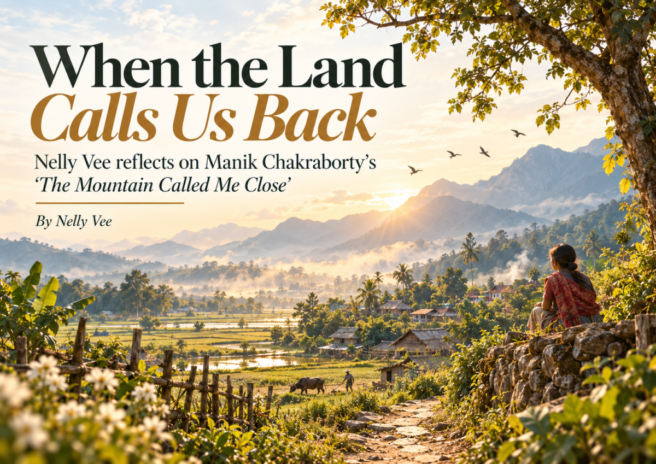
When the Land Calls Us Back
Nelly Vee reflects on Manik Chakraborty’s The Mountain Called Me Close.
Reflection by Nelly Vee • Editor, Krafty Page ChronicleS
Featured Work • Manik Chakraborty
Contributor Spotlight
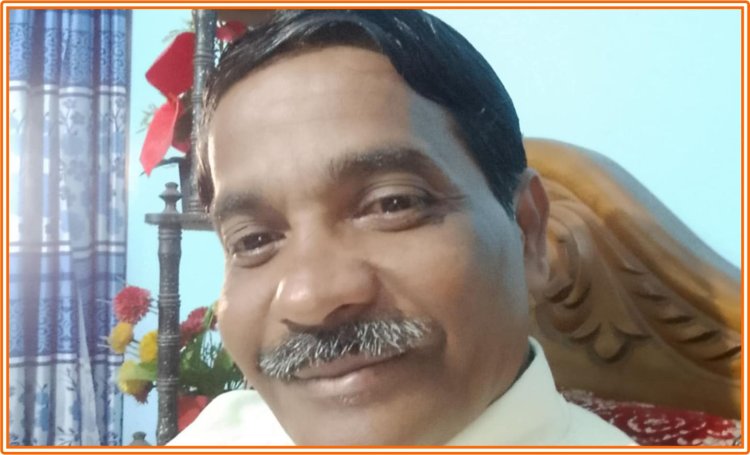
Manik Chakraborty
Manik Chakraborty is a Bangladeshi poet, rhyme writer, and literary organizer born in 1966 in North Sripur, Feni. Public literary profiles describe a writing life rooted in Bengali rhyme, social observation, community, and cultural organizing, alongside his professional work in banking.
His published work includes the collected volume Manik Chakrabortyr Chhora Samagra, released by Pratibha Publication for the 2017 Amar Ekushey Book Fair, along with multiple rhyme and poetry books. His literary activity has also included leadership and advisory roles in Bangladeshi literary organizations.
Author background: Orfeu.AL biography & poems • Rokomari author page.
Nelly Vee’s Lens • Place & Memory
Some Places Stop Being Scenery
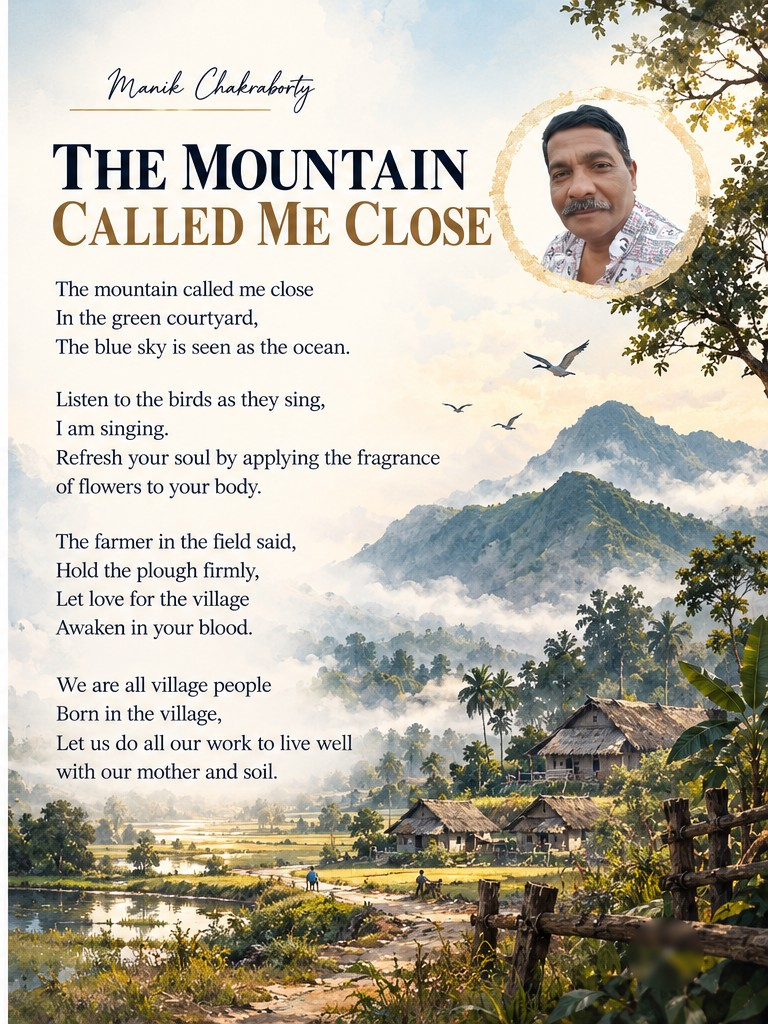
What pulled me into this poem was not the mountain by itself. It was the feeling of being called. There is a difference between looking at a landscape and feeling that a landscape somehow recognizes you.
The poem moves through birds, flowers, a field, a farmer, a plough, and the village. Simple images. Familiar images. But that is exactly why they work. They remind me that identity is not always built through dramatic moments. Sometimes it is built through repetition: the road you knew, the people who worked beside you, the sounds you heard in the morning, the soil that kept showing up under your feet.
That kind of memory does not ask permission before it becomes part of you. You can travel. You can change. You can become someone your younger self would barely recognize. And still, one smell, one rhythm, one landscape can pull an older version of you back into the room.
— Nelly Vee
Home is not always the place we stayed. Sometimes it is the place that kept staying inside us.
— Nelly Vee
Work, Soil & Dignity
The Poem Does Not Separate Beauty From Labor
One of the strongest turns in the poem comes when the farmer enters. The mountain, birds, and flowers create beauty, but the field introduces work. The plough changes the poem from observation into responsibility.
That matters to me because nostalgia can become too clean if we let it. We remember the beauty of a place and forget the labor that kept the place alive. Villages are not postcards. Homes are not built from memory alone. Someone planted. Someone carried. Someone repaired. Someone woke up early enough to do the work nobody celebrates.
So when the poem asks for love of the village to awaken in the blood, I do not hear sentiment only. I hear relationship. To love a place is also to recognize what it asks from us.
Belonging Without Romanticizing
Roots Can Ground Us Without Trapping Us
I am careful with the word roots because people sometimes use it to tell us where we are supposed to remain. But roots do not have to mean confinement. They can mean context. They can remind us what shaped us without deciding what we are allowed to become.
That is where I connect most strongly with Manik’s poem. The call of the mountain does not have to mean turning away from the future. It can mean carrying the past with enough honesty that we know what we are building from.
Reader Reflection
What Place Still Knows Your Name?
What landscape, neighborhood, kitchen, road, shoreline, field, or room still lives inside you? And when you remember it, are you only remembering where you came from—or are you also hearing something about who you are becoming?
Issue 3 Connection
April — Create • Stage I: Awakening
The Mountain Called Me Close belongs in April because awakening often begins with attention. The poem takes landscape, labor, sound, memory, and village life and turns them into a renewed awareness of relationship to place.
Share this:
- Share on Facebook (Opens in new window) Facebook
- Share on X (Opens in new window) X
- Share on LinkedIn (Opens in new window) LinkedIn
- Share on Pinterest (Opens in new window) Pinterest
- More
- Share on Reddit (Opens in new window) Reddit
- Share on X (Opens in new window) X
- Share on Tumblr (Opens in new window) Tumblr
- Share on Threads (Opens in new window) Threads
- Share on Telegram (Opens in new window) Telegram
- Share on WhatsApp (Opens in new window) WhatsApp
- Print (Opens in new window) Print
- Email a link to a friend (Opens in new window) Email
- Share on Mastodon (Opens in new window) Mastodon
- Share on Nextdoor (Opens in new window) Nextdoor
- Share on Bluesky (Opens in new window) Bluesky
Discover more from KVI Network
Subscribe to get the latest posts sent to your email.