Krafty Page ChronicleS • Issue 3 • May — Belong • Stage II: Chrysalis
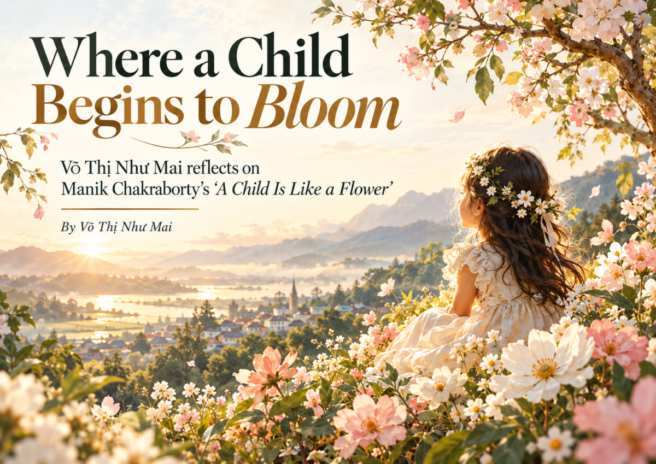
Where a Child Begins to Bloom
Võ Thị Như Mai reflects on Manik Chakraborty’s A Child Is Like a Flower.
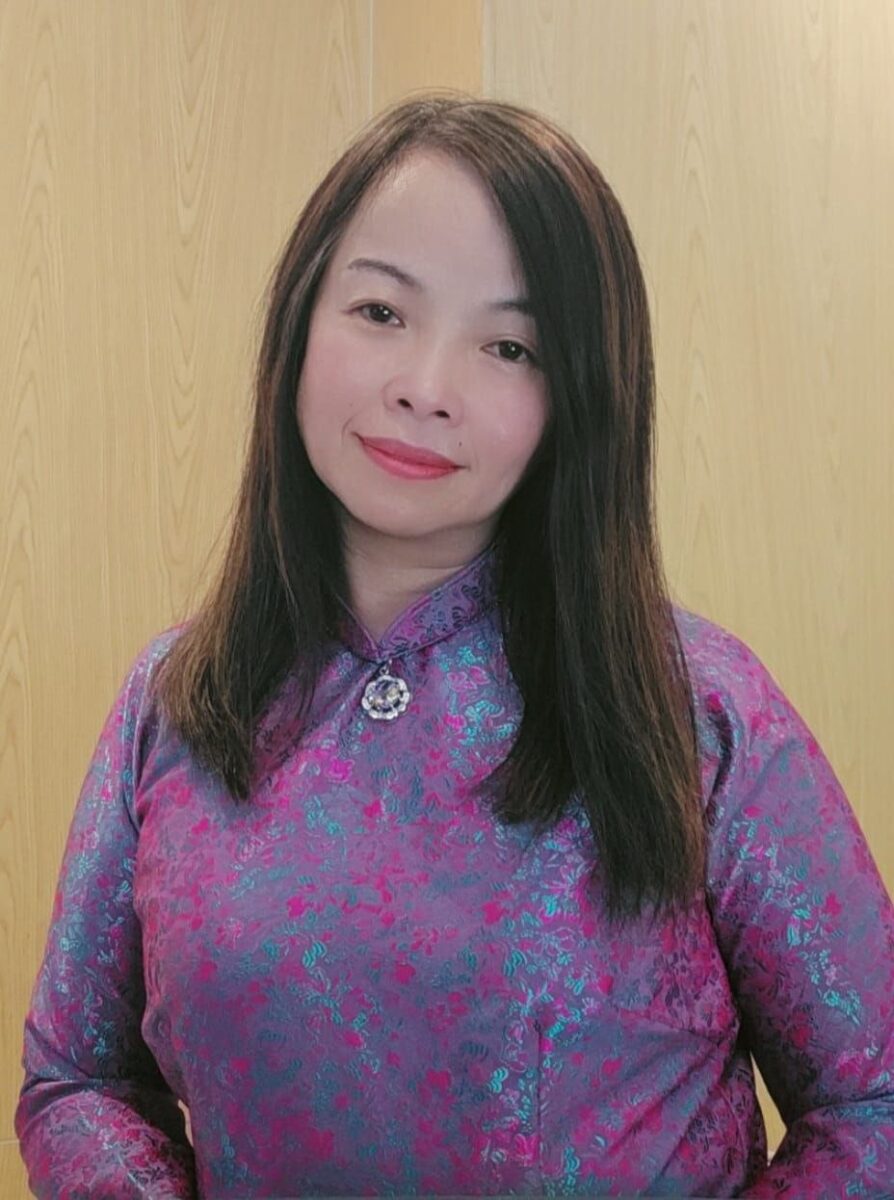
Reflection by Võ Thị Như Mai • Co-Editor, Krafty Page ChronicleS
Featured Work • Manik Chakraborty
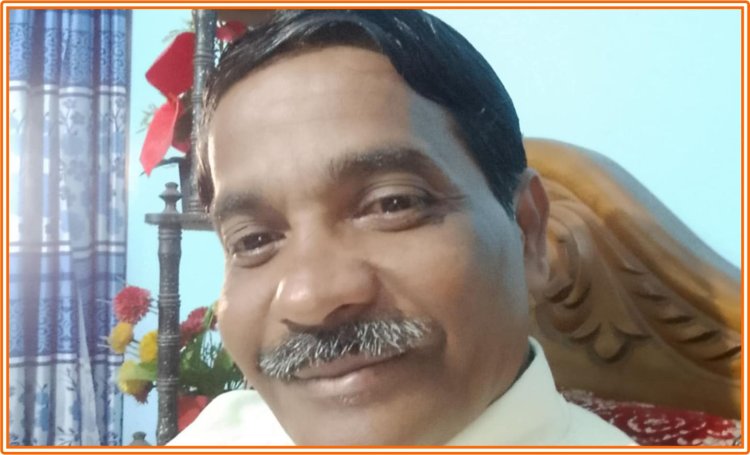
Contributor Spotlight
Manik Chakraborty
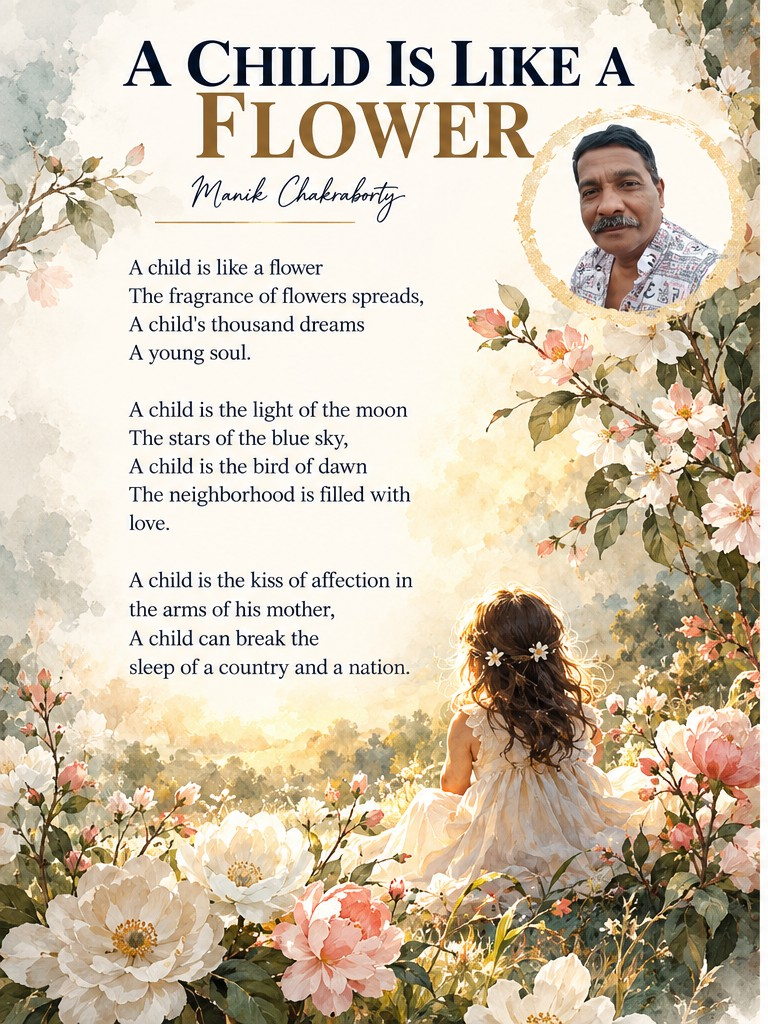
Manik Chakraborty is a Bangladeshi poet, rhyme writer, and literary organizer born in 1966 in North Sripur, Feni. Public literary profiles describe a writing life rooted in Bengali rhyme, social observation, community, and cultural organizing, alongside his professional work in banking.
His published work includes the collected volume Manik Chakrabortyr Chhora Samagra, released by Pratibha Publication for the 2017 Amar Ekushey Book Fair, along with multiple rhyme and poetry books. His literary activity has also included leadership and advisory roles in Bangladeshi literary organizations.
Author background: Orfeu.AL biography & poems • Rokomari author page.
Mai’s Lens • Childhood & Care
A Child Is Never Only Small
What touches me first in this poem is its gentleness. The child is compared with a flower, but the comparison does not stop at beauty. A flower carries fragrance, possibility, and a future that cannot be forced open before its time. A child is also growing toward something we cannot completely predict.
When I read the image of a young soul surrounded by moonlight, dawn, affection, and the neighborhood, I do not hear only innocence. I hear responsibility. A child may be held in a mother’s arms, but the world around that child is also shaping what becomes possible. Family matters. Community matters. The language we use around children matters. Even the dreams we make room for—or quietly discourage—can remain with them for years.
This is why the poem feels larger than one child. It asks us to consider the future hidden inside the present. We often speak about children as though they belong only to a family, but every child eventually steps into a wider society. The tenderness we give today may become courage, compassion, imagination, or responsibility tomorrow.
— Võ Thị Như Mai
A child does not need us to decide the shape of the flower. A child needs enough care, light, and room to grow.
— Võ Thị Như Mai
Belonging Begins Early
Before a Child Knows the Word “Belong,” They Learn Its Feeling
Belonging begins in ordinary gestures: being welcomed into a room, being listened to without ridicule, being corrected without humiliation, being protected without being made afraid of the world. These moments may look small to adults. To a child, they can become the first language of safety.
That is what makes the poem’s final movement so meaningful to me. The child becomes connected with the life of a country and a nation. I read that not as a burden placed on children, but as a reminder placed on adults. The future we hope for cannot be separated from the way we treat the people who will inherit it.
Memory, Culture & Humanity
Different Homes, Shared Hopes
Across languages and cultures, childhood is never exactly the same. Families carry different customs, expectations, histories, and ways of showing affection. Yet the poem reaches toward something deeply human: the wish that a young person may grow with love around them and possibility ahead of them.
For me, that is where poetry becomes a bridge. It does not erase difference. It gives us a place to recognize one another through it. A flower may grow in different soil, under different weather, in a different country, and still remind us that life needs care before it can fully open.
Reader Reflection
What Did the Adults Around You Teach You About Your Own Possibility?
And for the children who are growing around us now: what are we teaching them through our attention, our patience, our language, and the space we make for their dreams?
Issue 3 Connection
May — Belong • Stage II: Chrysalis
A Child Is Like a Flower belongs in May because belonging begins long before we can define it. The poem places childhood inside family, neighborhood, affection, community, and the larger future a society hopes to build.
Share this:
- Share on Facebook (Opens in new window) Facebook
- Share on X (Opens in new window) X
- Share on LinkedIn (Opens in new window) LinkedIn
- Share on Pinterest (Opens in new window) Pinterest
- More
- Share on Reddit (Opens in new window) Reddit
- Share on X (Opens in new window) X
- Share on Tumblr (Opens in new window) Tumblr
- Share on Threads (Opens in new window) Threads
- Share on Telegram (Opens in new window) Telegram
- Share on WhatsApp (Opens in new window) WhatsApp
- Print (Opens in new window) Print
- Email a link to a friend (Opens in new window) Email
- Share on Mastodon (Opens in new window) Mastodon
- Share on Nextdoor (Opens in new window) Nextdoor
- Share on Bluesky (Opens in new window) Bluesky
Discover more from KVI Network
Subscribe to get the latest posts sent to your email.